
UAE corporate tax in Dubai
Dubai continues to attract businesses, investors, entrepreneurs, and multinational companies because of its strong economy, modern infrastructure, and business-friendly environment. As the UAE’s tax framework continues to develop, understanding UAE corporate tax in Dubai has become essential for businesses operating in the emirate.
Corporate tax is not simply about calculating tax and submitting a return. Businesses need to understand registration requirements, taxable income, deductible expenses, record-keeping, compliance deadlines, transfer pricing, and other applicable rules. Proper preparation can help businesses manage their tax responsibilities efficiently and avoid unnecessary compliance issues.
Table of Contents
What Is Corporate Tax in the UAE?
UAE corporate tax in Dubai is a federal tax imposed on the taxable income of businesses and other entities that fall within the scope of the UAE Corporate Tax Law.
The standard corporate tax rate is generally 9% on taxable income exceeding AED 375,000, while qualifying taxable income up to AED 375,000 is subject to a 0% rate. Certain businesses and income categories may be subject to specific rules or exemptions.
For companies operating in Dubai, understanding UAE corporate tax in Dubai is important because businesses must comply with the federal corporate tax framework even though they operate within the emirate.
Corporate tax applies to eligible businesses regardless of whether they are locally owned, internationally owned, established on the mainland, or operating within certain free zones, although qualifying free zone persons may benefit from specific treatment if they meet the applicable conditions.
Who Needs to Consider UAE Corporate Tax?
Corporate Tax can apply to a wide range of businesses, including:
- UAE mainland companies
- Certain free zone businesses
- Limited liability companies
- Branches of foreign companies
- Certain partnerships and other juridical persons
- Other entities that fall within the scope of the Corporate Tax Law
Individuals conducting business activities may also come within the corporate tax regime when their business activity and income meet the applicable conditions.
Businesses should therefore assess their individual circumstances rather than assuming that their legal structure or free zone status automatically determines their tax treatment.
Understanding Taxable Income
One of the most important aspects of UAE corporate tax in Dubai is determining taxable income correctly.
Corporate tax is generally calculated based on taxable income derived from accounting income, subject to adjustments required under the corporate tax law.
Businesses should maintain accurate financial records covering:
- Revenue and sales
- Operating expenses
- Employee costs
- Assets and liabilities
- Depreciation
- Finance costs
- Related-party transactions
- Other relevant financial information
Not every accounting expense will necessarily receive the same treatment for corporate tax purposes. Businesses should review expenses carefully and maintain appropriate supporting documentation.
Accurate bookkeeping therefore plays an important role in the overall tax compliance process.
Corporate Tax Registration
Businesses that fall within the scope of corporate tax generally need to register with the Federal Tax Authority and obtain a corporate tax registration number.
Corporate tax registration should not be treated as a last-minute administrative task. Businesses should understand their registration obligations and applicable deadlines based on their specific circumstances.
Early registration and proper record preparation can make the overall compliance process more organized.
For companies managing UAE corporate tax in Dubai, maintaining updated company information and accounting records can also make it easier to prepare for future filing requirements.
Corporate Tax Return Filing
Corporate tax return filing is another important part of business compliance.
A taxable person generally needs to submit a corporate tax return and settle any corporate tax due within the applicable deadline. The filing deadline depends on the relevant tax period and applicable rules.
Businesses should prepare their financial information well before the filing deadline. Waiting until the final days can increase the risk of calculation errors, missing documentation, or delays.
A structured approach to UAE corporate tax in Dubai can include:
- Maintaining accurate accounting records.
- Reviewing taxable income.
- Identifying applicable tax adjustments.
- Checking deductible and non-deductible expenses.
- Reviewing related-party transactions.
- Preparing the corporate tax return.
- Reviewing the return before submission.
- Paying any tax due within the applicable deadline.
Importance of Proper Bookkeeping
Good bookkeeping is the foundation of effective tax compliance.
Businesses that maintain incomplete or inaccurate accounting records may find it difficult to calculate taxable income correctly. Missing invoices, unsupported expenses, incorrect revenue recognition, or poorly maintained records can create additional compliance challenges.
Professional bookkeeping can help businesses maintain organized financial information throughout the year rather than trying to reconstruct records at the end of the tax period.
This is particularly important for businesses managing UAE corporate tax in Dubai, where accurate financial information supports tax calculations, return preparation, and compliance reviews.
Deductible and Non-Deductible Expenses
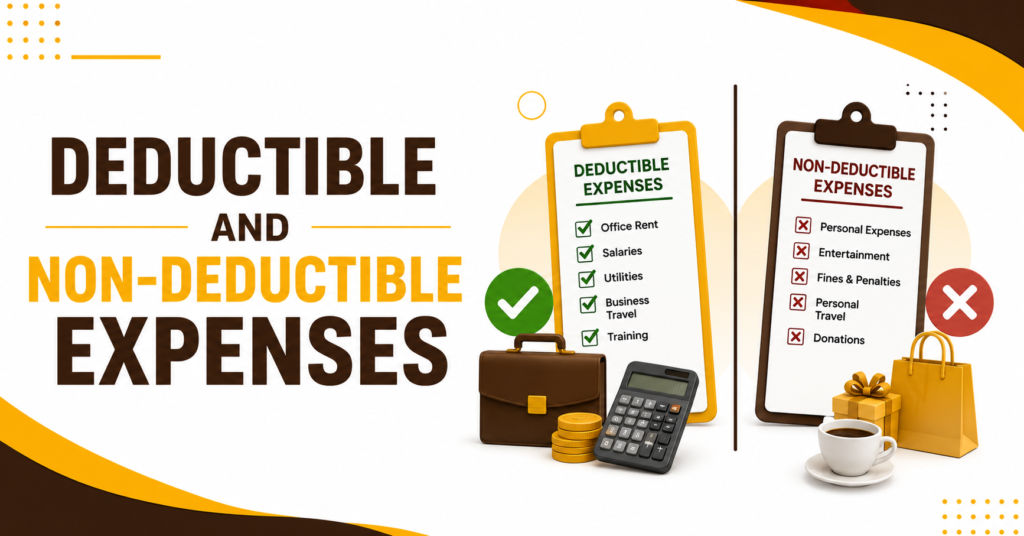
Corporate tax calculations may require businesses to distinguish between expenses that are deductible and those that are subject to restrictions or exclusions.
Businesses should maintain proper invoices, contracts, payment records, and other supporting documents for expenses claimed for tax purposes.
Certain expenses may have specific limitations under the corporate tax rules. Therefore, businesses should not automatically assume that every expense recorded in their accounting system can be fully deducted for corporate tax purposes.
A professional review can help businesses identify potential tax adjustments and improve the accuracy of their tax calculations.
Transfer Pricing and Related-Party Transactions
Businesses involved in transactions with related parties or connected persons may need to consider UAE transfer pricing requirements.
Transactions should generally follow the arm’s-length principle, meaning that the conditions should be consistent with those that would have been agreed between independent parties in comparable circumstances.
Depending on the business and applicable thresholds, transfer pricing documentation may also be required.
Companies should identify related-party transactions early instead of waiting until corporate tax return preparation. Proper documentation and analysis can support stronger UAE corporate tax compliance in Dubai and reduce the risk of last-minute issues.
Free Zone Businesses and Corporate Tax
Dubai has numerous free zones that attract companies from different industries. However, operating from a free zone does not automatically mean that a business is outside the scope of corporate tax.
Qualifying Free Zone Persons may benefit from a 0% corporate tax rate on qualifying income, subject to meeting the relevant conditions and requirements.
Free zone businesses should therefore review their activities, income, records, and eligibility carefully. They should also understand the distinction between qualifying and non-qualifying income where applicable.
Professional advice can help businesses understand how their free zone status interacts with UAE corporate tax in Dubai requirements.
Corporate Tax Compliance and Penalties
Corporate tax compliance should be treated as an ongoing business responsibility rather than an annual activity.
Businesses should monitor:
- Registration obligations
- Filing deadlines
- Tax payments
- Accounting records
- Supporting documentation
- Transfer pricing requirements
- Changes in business activities
- Applicable Corporate Tax rules
Failure to meet applicable obligations may result in administrative penalties or other consequences.
Businesses can reduce compliance risks by establishing internal procedures and reviewing their tax position regularly.
How Professional Tax Support Can Help
Corporate tax can involve accounting, tax, documentation, and compliance considerations. For many businesses, managing all these areas internally can be challenging.
Professional accounting and tax advisors can assist with:
- Corporate Tax registration
- Taxable income calculations
- Accounting and bookkeeping
- Corporate Tax return preparation
- Tax compliance reviews
- Transfer pricing support
- Financial record management
- Tax planning and advisory
For businesses looking for support with UAE corporate tax in Dubai, working with experienced professionals can provide a structured approach to managing tax responsibilities.
Why Choose Singiri & Co?
Singiri & Co provides professional accounting, auditing, corporate tax, VAT, bookkeeping, and business advisory services to businesses in the UAE.
The firm can support businesses with accounting records, tax calculations, compliance reviews, corporate tax filing, and other financial requirements.
With professional assistance, businesses can focus on their core operations while maintaining a more organized approach to their financial and tax responsibilities.
Conclusion
Understanding UAE corporate tax in Dubai is essential for businesses that want to remain compliant and financially organized. From registration and bookkeeping to taxable income calculations, transfer pricing, documentation, and return filing, every part of the corporate tax process deserves careful attention.
Businesses should avoid waiting until the filing deadline to review their tax position. Maintaining accurate records throughout the year and seeking professional guidance when required can make corporate tax compliance more efficient and reduce avoidable errors.
Singiri & Co can help businesses manage their accounting, auditing, corporate tax, VAT, and business advisory requirements with professional support.
Stay compliant. Stay prepared. Grow with confidence with Singiri & Co.
FAQS
1. What is the corporate tax rate in Dubai?
The standard UAE corporate tax rate is generally 9% on taxable income exceeding AED 375,000, subject to the applicable rules and conditions.
2. What is the UAE corporate tax rate?
The standard rate is 9% on taxable income exceeding AED 375,000. Taxable income up to AED 375,000 is subject to a 0% rate.
3. Do free zone companies need corporate tax registration?
Free Zone businesses may have corporate tax obligations and should assess their position based on their activities, income, and applicable conditions.
4. Is corporate tax calculated on turnover?
Generally, corporate tax is calculated based on taxable income rather than simply applying the tax rate to turnover.
5. What records should a business maintain?
Businesses should maintain financial statements, invoices, bank records, ledgers, expense documents, contracts, and other supporting records.
6. Can businesses manage corporate tax themselves?
Yes, businesses with suitable knowledge and resources can manage their tax obligations. Professional assistance can be useful for complex matters.
7. Why is bookkeeping important for corporate tax?
Accurate bookkeeping provides the financial information needed to calculate taxable income and prepare the corporate tax return correctly.
8. How can Singiri & Co help?
Singiri & Co can assist with accounting, corporate tax registration, tax calculations, return preparation, compliance reviews, and other UAE tax requirements.