
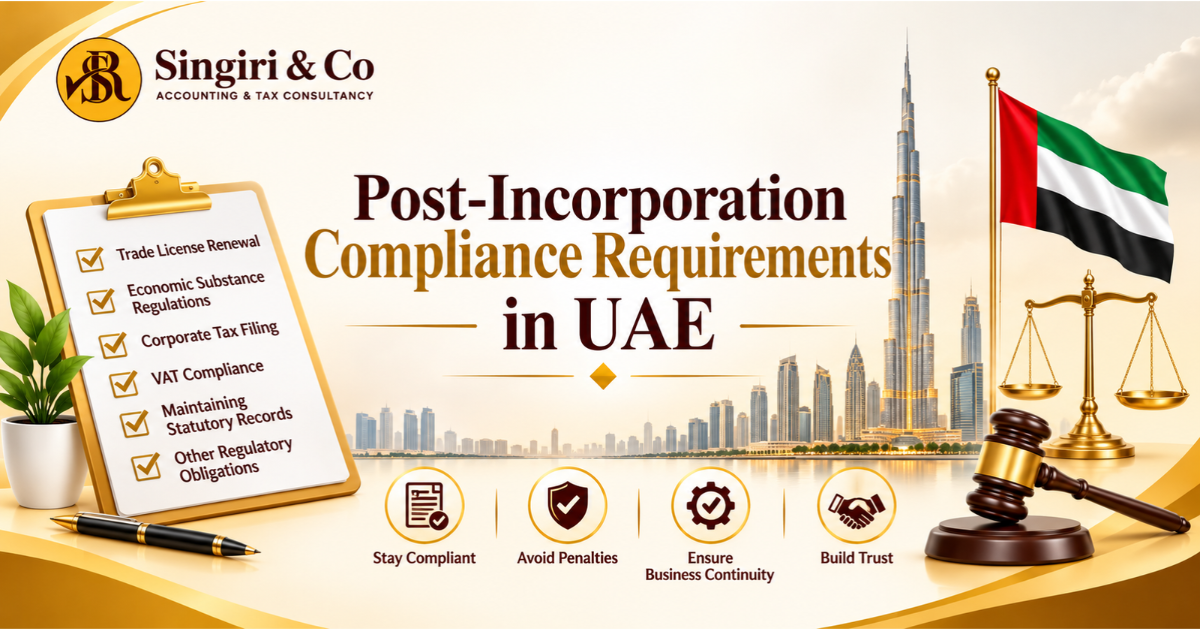
The United Arab Emirates has become a preferred destination for entrepreneurs, investors, and international companies looking to establish their businesses. Its strategic location, modern infrastructure, business-friendly regulations, and access to international markets make it an attractive location for new business ventures.
However, starting a company requires proper planning, documentation, and regulatory approvals. Entrepreneurs must understand the applicable business activities, legal structures, licensing requirements, and registration procedures before commencing operations.
Understanding the post-incorporation compliance requirements in UAE helps new investors make informed decisions, avoid unnecessary delays, and establish their businesses according to UAE regulations. Whether an entrepreneur plans to establish a mainland company or a free zone entity, selecting the appropriate structure is essential for long-term business success.
Table of Contents
Understanding Business Incorporation in the UAE
Company incorporation refers to the legal process of registering a business with the relevant UAE authority and obtaining permission to conduct specific commercial activities.
Businesses can generally establish themselves through mainland or free zone jurisdictions. Offshore structures are also available for certain international business purposes.
The choice depends on the company’s business objectives, ownership requirements, operational activities, customer base and budget.
A well-planned post-incorporation compliance requirement in UAE provides a strong foundation for legal compliance, financial management, and future business expansion.
Choosing the Right Business Jurisdiction
Selecting the appropriate jurisdiction is one of the most important decisions when establishing a company.
Mainland Company Formation
Mainland companies are licensed by the relevant emirate’s economic department or competent authority. In Dubai, the Department of Economy and Tourism handles mainland business registration and licensing.
Mainland companies can conduct permitted business activities across the UAE market, subject to applicable licensing and regulatory requirements. Understanding post-incorporation compliance requirements in UAE helps mainland businesses maintain their licenses and meet ongoing regulatory obligations.
Most business activities allow 100% foreign ownership, although certain strategic or regulated activities may have additional ownership conditions.
Mainland incorporation is suitable for businesses planning to work with UAE customers, government entities, and local organizations. Proper compliance management also supports smooth business operations and long-term growth.
Free Zone Company Formation
Free zones provide specialized business environments with their own regulatory authorities, licensing procedures, and operational facilities.
Many free zones allow 100% foreign ownership and offer different license packages depending on the business activity.
They are particularly suitable for international trading, consultancy, technology, logistics, and other specialized business activities.
However, businesses must understand the applicable restrictions when conducting activities outside their free zone.
Choosing the right jurisdiction makes the post-incorporation compliance requirements in UAE more efficient and helps businesses select a structure that supports their commercial objectives.
Selecting the Appropriate Business Activity
Before applying for a business license, entrepreneurs must identify the activities they intend to conduct.
The selected activity determines the license category, legal structure, and regulatory approvals required.
Common business license categories include:
- Commercial license for trading and commercial activities.
- Professional license for consultancy and professional services.
- Industrial license for manufacturing and industrial operations.
- Tourism license for approved tourism-related activities.
- Agricultural license for agricultural businesses.
Businesses may be permitted to include multiple activities under a single license, depending on the authority’s rules.
Selecting the correct activity from the beginning helps prevent licensing complications and ensures the company operates within its approved scope.
Selecting the Legal Structure
The legal structure determines ownership arrangements, responsibilities, management authority, and regulatory obligations.
Common legal structures available in the UAE include
- Limited Liability Company (LLC).
- Sole Establishment.
- General Partnership.
- Limited Partnership.
- Public Joint Stock Company.
- Private Joint Stock Company.
- Branch of a Foreign Company.
The appropriate structure depends on the number of shareholders, investment requirements, business activity, and operational plans.
Entrepreneurs should evaluate these options carefully before proceeding with registration.
Trade Name Reservation and Initial Approval
After selecting the business activity and legal structure, entrepreneurs must reserve a suitable trade name.
The proposed name must comply with the applicable naming guidelines. It should not conflict with existing registrations, violate public morals, or include restricted terms without permission.
Once the name is approved, the applicant can proceed with the initial approval application.
Initial approval confirms that the relevant authority has no objection to the proposed establishment proceeding to the next registration stages. However, it does not authorize the company to begin conducting business activities.
Certain regulated activities may require additional approvals from the relevant government authorities.
Completing these requirements correctly is an important part of the post-incorporation compliance requirements in UAE.
Preparing Legal Documents and Agreements
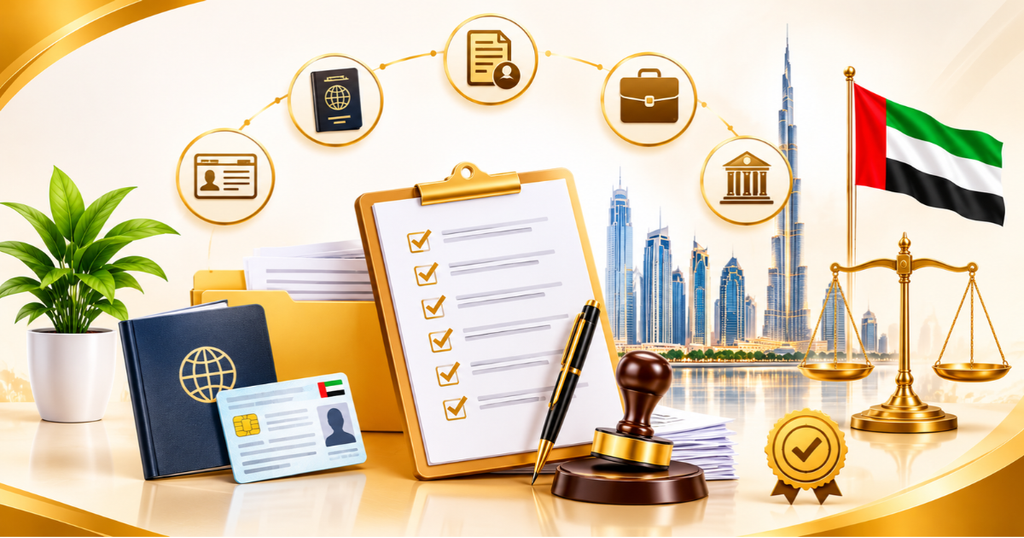
Documentation is an essential part of company incorporation and meeting post-incorporation compliance requirements in UAE. The exact requirements depend on the selected jurisdiction, legal structure, and shareholders.
Commonly requested documents include:
- Passport copies of shareholders and directors.
- Copies of UAE visas and Emirates IDs, if applicable.
- Proposed company trade name.
- Business activity details.
- Shareholder information and contact details.
- Memorandum of Association (MOA), where applicable.
- Articles of Association, where required.
- Board resolution for corporate shareholders, where applicable.
- Power of attorney, if an authorized representative is involved.
Foreign corporate documents may require notarization, attestation, or legalization depending on the authority’s requirements.
Maintaining accurate company records and updated documentation also helps businesses fulfill post-incorporation compliance requirements in UAE, reduce application delays, and support smooth regulatory operations.
Arranging Office Space and Business Address
A registered business address is generally required for company incorporation, depending on the jurisdiction and license package.
Mainland businesses may need to provide an approved tenancy agreement. In Dubai, applicable tenancy contracts must be registered through Ejari.
Free zones offer different office solutions, including shared workspaces, flexi-desks, and dedicated offices and warehouses.
The selected premises must meet the requirements of the licensing authority and the company’s approved business activities.
Obtaining the Business License
Once the required documents, approvals, and office arrangements are completed, the application can be submitted to the relevant licensing authority.
The authority reviews the application, verifies the submitted documents, and determines the applicable registration and licensing fees.
After successful approval and payment, the company receives its trade license and incorporation documents.
The license confirms the approved business activities and provides the legal basis for conducting operations within its authorized scope.
Post-Incorporation Compliance Requirements
Company incorporation does not end with receiving the trade license. Businesses must also complete relevant post-registration requirements.
These may include:
- Opening a corporate bank account.
- Applying for establishment and immigration-related registrations, where required.
- Arranging employee visas and labor registrations.
- Maintaining proper accounting records.
- Registering, if necessary, for UAE corporate tax with the Federal Tax Authority.
- Registering for VAT when the applicable mandatory threshold is met.
- Maintaining beneficial ownership information and submitting required updates.
- Renewing the trade license before its expiry.
Businesses must also understand their tax filing, payment, and financial reporting responsibilities.
Following these requirements ensures the post-incorporation compliance requirements in UAE leads to a compliant and operational business rather than simply obtaining a license.
Common Challenges During Company Incorporation
New entrepreneurs may experience challenges when selecting a jurisdiction, identifying the correct business activity, or preparing regulatory documents. Understanding post-incorporation compliance requirements in UAE is equally important to ensure that the company meets its ongoing legal and regulatory obligations after registration.
Other common difficulties include unexpected licensing expenses, additional approval requirements, banking documentation, and misunderstandings about tax obligations.
Choosing an unsuitable legal structure can also create operational difficulties as the business expands.
Therefore, professional guidance and proper planning can help investors minimize administrative complications, maintain regulatory compliance, and make better business incorporation decisions.
Conclusion
Establishing a company in the UAE offers excellent opportunities for entrepreneurs and international investors. However, successful incorporation requires careful consideration of the business jurisdiction, legal structure, licensing requirements, documentation, and ongoing compliance responsibilities.
Properly managed post-incorporation compliance requirements in UAE help businesses establish a strong legal foundation while preparing for sustainable growth and expansion.
Singiri & Co. provides professional business setup, company incorporation, and corporate advisory support to entrepreneurs and investors across the UAE. Our services include mainland and free zone company formation, trade license assistance, documentation support, accounting and bookkeeping, VAT registration, corporate tax registration, and compliance services.
With experienced professionals and business-focused solutions, Singiri & Co. helps simplify the incorporation journey so entrepreneurs can focus on developing their businesses.
FAQS
1. What are the procedures for incorporating a company in the UAE?
The procedures generally include selecting a business activity, choosing a legal structure, reserving a trade name, obtaining initial approval, preparing legal documents, arranging business premises, securing additional approvals where necessary and obtaining the final trade licence.
2. How much does it cost to incorporate a company in the UAE?
Company incorporation costs depend on the jurisdiction, business activity, licence type, office requirements, visa allocation and government fees. Investors should request a detailed quotation before proceeding.
3. Can foreigners own 100% of a company in the UAE?
Yes. Many mainland and free zone business activities allow 100% foreign ownership. However, certain strategic and regulated activities may have additional ownership requirements.
4. Is a physical office mandatory for company registration in the UAE?
Requirements vary according to the jurisdiction and licence type. Some free zones offer flexi-desk or shared-office arrangements, while mainland businesses generally need to meet the relevant premises and address requirements.
5. How much time does it take to incorporate a business in the UAE?
The timeline depends on the jurisdiction, business activity, document verification and additional government approvals. Some straightforward applications can be completed quickly, while regulated activities may require more time.
6. What documents are required for UAE company formation?
Common documents include passport copies, shareholder details, proposed trade names, business activity information and incorporation agreements. Additional documents may be required for corporate shareholders or regulated activities.
7. What is the difference between mainland and free zone companies?
Mainland companies are licensed by the relevant emirate authority and can conduct permitted activities across the UAE market. Free zone companies are licensed by individual free zone authorities and operate under their specific regulations and permitted market-access arrangements.
8. Is corporate tax registration required after company incorporation?
Businesses must assess their corporate tax registration obligations under UAE law. Corporate Tax registration requirements apply to taxable persons, subject to the relevant rules and exceptions.