
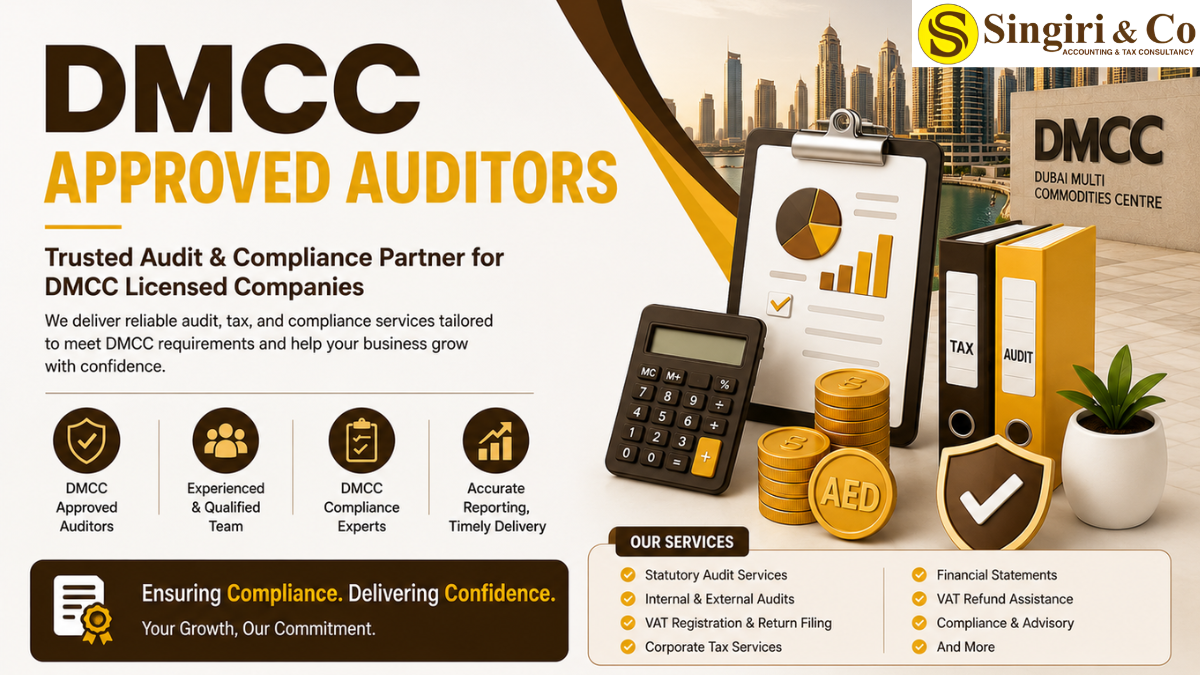
DMCC Approved Auditors 2026
The Dubai Multi Commodities Centre (DMCC) continues to be one of the most prestigious free zones in the UAE, attracting thousands of businesses from around the world. As regulatory standards evolve, companies operating within DMCC must ensure compliance with financial reporting requirements. One of the most important compliance obligations is conducting annual audits through DMCC approved auditors in 2026.
Choosing the right DMCC-approved auditors for 2026 is essential for maintaining compliance, ensuring transparency, and supporting sustainable business growth. In this guide, we will explore the role of approved auditors, audit requirements, benefits, and how businesses can select the best auditing partner.
Table of Contents
What Are DMCC Approved Auditors?
DMCC-approved auditors for 2026 are audit firms officially recognized by DMCC to conduct statutory audits for companies registered within the free zone. These auditors meet specific professional standards and are authorized to submit audited financial statements to DMCC.
The approval process ensures that only qualified auditing firms can provide audit services to DMCC-registered entities.
Why Are DMCC Audits Important?
Annual audits are mandatory for most companies operating in DMCC. These audits help:
- Ensure regulatory compliance
- Improve financial transparency
- Detect errors and irregularities
- Strengthen investor confidence
- Support business decision-making
- Facilitate banking and financing requirements
Working with DMCC Approved Auditors 2026 ensures that your audit reports meet all DMCC requirements.
DMCC Audit Requirements in 2026
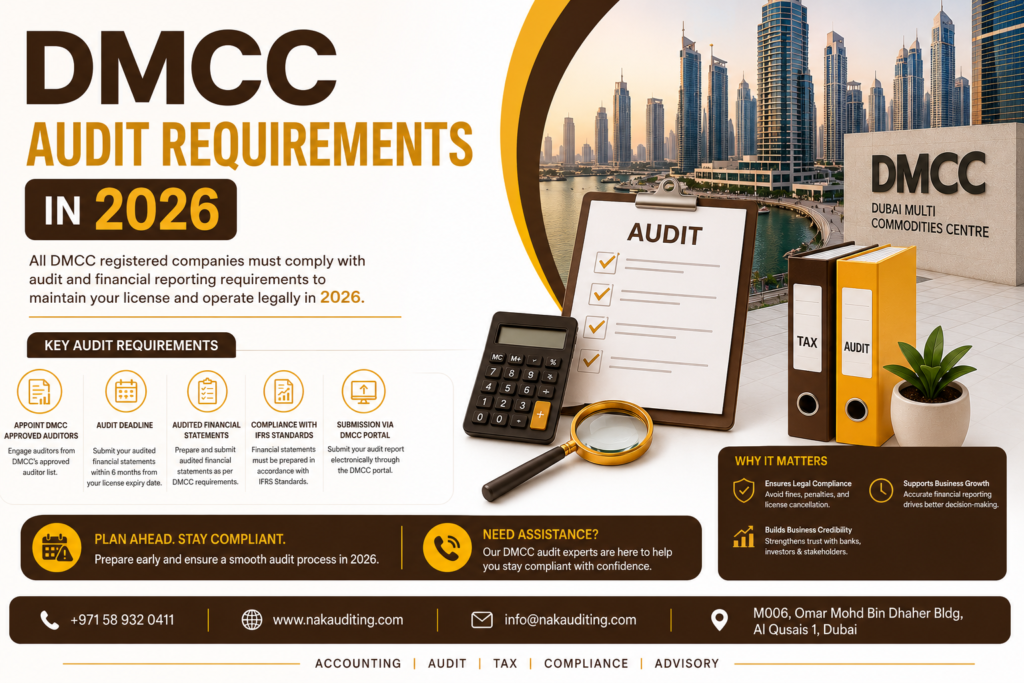
Companies registered within DMCC must maintain proper accounting records and prepare annual financial statements. These records must accurately reflect the company’s financial position.
Key requirements include:
1. Annual Financial Statements
Businesses must prepare financial statements according to internationally accepted accounting standards.
2. Independent Audit
An independent audit must be conducted by DMCC-approved auditors in 2026.
3. Timely Submission
Audit reports should be submitted within the deadline specified by DMCC regulations.
4. Proper Record Keeping
Companies must maintain accounting records, invoices, contracts, and supporting financial documents.
Benefits of Hiring DMCC Approved Auditors 2026
Regulatory Compliance
Using DMCC Approved Auditors 2026 ensures that your company complies with all DMCC regulations and avoids penalties.
Improved Financial Accuracy
Professional auditors review financial transactions and identify potential discrepancies.
Risk Management
Auditors help businesses identify operational and financial risks before they become significant issues.
Enhanced Business Credibility
Audited financial statements improve credibility with investors, lenders, and business partners.
Better Strategic Planning
Reliable financial data helps management make informed decisions and plan for future growth.
How to Choose the Right DMCC Approved Auditor
Selecting the right DMCC approved auditor is essential for ensuring accurate financial reporting, regulatory compliance, and long-term business success. Here are the key factors to consider:
Selecting the right audit firm is critical. Consider the following factors:
Experience
Choose auditors with extensive experience in DMCC compliance and UAE regulations.
Industry Expertise
Industry-specific knowledge helps auditors understand your business operations and risks.
Reputation
Look for firms with strong client reviews and a proven track record.
Service Quality
A good audit firm provides clear communication, professional guidance, and timely reporting.
Additional Advisory Services
Many businesses prefer audit firms that also offer accounting, VAT, tax, and advisory services.
Common Challenges Faced During DMCC Audits
Many companies encounter difficulties during audits due to:
- Incomplete accounting records
- Missing supporting documents
- Delayed bookkeeping
- VAT reconciliation issues
- Poor internal controls
- Lack of financial reporting procedures
Engaging DMCC Approved Auditors 2026 early can help businesses address these issues before the audit process begins.
Steps Involved in a DMCC Audit
Step 1: Planning
The audit begins with understanding the company’s business operations, financial structure, and compliance requirements. Auditors identify key risk areas and create an audit pla
Step 2: Document Review
Auditors review financial records such as invoices, bank statements, accounting books, contracts, payroll records, and supporting documents to ensure they are complete and accurate.
Step 3: Verification
Financial transactions, account balances, and supporting evidence are verified to confirm the accuracy of financial statements and compliance with DMCC and UAE regulations.
Step 4: Risk Assessment
The audit team evaluates internal controls, identifies financial and operational risks, and highlights areas that require improvement to strengthen compliance.
Step 5: Audit Report Preparation
Based on the audit findings, auditors prepare a detailed audit report with their opinion on the financial statements and recommendations for better financial management.
Step 6: Submission
The final audited financial statements and audit report are submitted to meet DMCC requirements, ensuring regulatory compliance and helping businesses avoid penalties
Why Businesses Need Professional Audit Support in 2026
With increasing regulatory scrutiny and evolving compliance requirements, businesses can no longer view audits as a simple annual obligation.
Professional DMCC Approved Auditors 2026 help organizations:
- Improve financial governance
- Strengthen internal controls
- Ensure compliance with UAE regulations
- Support corporate tax readiness
- Enhance operational efficiency
Their expertise enables businesses to focus on growth while maintaining compliance.
Future Trends in DMCC Auditing
The auditing landscape is rapidly evolving in 2026, driven by technological advancements and changing regulatory requirements. Businesses must stay updated to ensure compliance and improve financial transparency.
Digital Auditing
Technology is making audits faster and more accurate.
Digital technologies, cloud-based accounting systems, and automation tools are making audits faster, more accurate, and more efficient. These innovations reduce manual errors and simplify the audit process.
Data Analytics
Advanced analytics helps auditors identify patterns and risks
Modern auditors use advanced data analytics to examine large volumes of financial data, identify unusual transactions, detect potential risks, and provide deeper business insights for better decision-making.
Corporate Tax Compliance
The introduction of corporate tax increases the importance of accurate financial reporting.
With the UAE corporate tax regime in place, businesses must maintain accurate financial records and tax documentation. Auditors play a vital role in ensuring compliance with corporate tax regulations and minimizing the risk of penalties.
ESG Reporting
Environmental, social, and governance reporting is becoming increasingly relevant for businesses.
Companies that work with experienced DMCC approved auditors in 2026 are better prepared to adapt to these evolving requirements.
Environmental, Social, and Governance (ESG) reporting is becoming increasingly important as investors and stakeholders expect greater transparency. Auditors help businesses verify ESG disclosures and improve sustainability reporting
Conclusion
Finding reliable DMCC approved auditors for 2026 is essential for maintaining compliance, improving financial transparency, and supporting long-term business success. A professional audit not only fulfills regulatory obligations but also strengthens confidence among investors, stakeholders, and financial institutions.
For businesses seeking expert auditing and compliance support in Dubai, Singiri & Co offers professional audit, accounting, VAT, corporate tax, bookkeeping, and advisory services. With a commitment to accuracy, compliance, and client success, Singiri & Co helps businesses navigate complex financial regulations while focusing on sustainable growth. Whether you need annual audits, financial reporting, or strategic advisory services, Singiri & Co can be your trusted partner for achieving business excellence in the UAE.
FAQS
1. What are DMCC Approved Auditors 2026?
They are audit firms officially approved by DMCC to conduct audits for companies registered within the free zone.
2. Is an audit mandatory for DMCC companies?
Yes, most DMCC-registered companies are required to maintain audited financial statements.
3. Why should I choose DMCC-approved auditors in 2026?
They ensure compliance with DMCC regulations and provide professionally accepted audit reports.
4. When should audit reports be submitted?
Companies must submit audit reports according to DMCC’s prescribed deadlines.
5. What documents are required for a DMCC audit?
Bank statements, invoices, accounting records, contracts, payroll records, and financial statements.
6. Can auditors help with corporate tax compliance?
Yes, many approved auditors provide tax advisory and compliance support.
7. How long does a DMCC audit take?
The duration depends on the company’s size, transaction volume, and record quality.
8. Why choose Singiri & Co?
Singiri & Co offers comprehensive audit, accounting, VAT, bookkeeping, and corporate tax services with a focus on compliance and business growth.