Corporate Tax in the UAE : Complete Guide for Businesses in 2026
The United Arab Emirates continues to be one of the world’s most attractive destinations for businesses and investors. Its strategic location, advanced infrastructure, and business-friendly environment have helped companies thrive across various industries.
With the introduction of corporate tax in the UAE, businesses operating in the country must understand their tax responsibilities and compliance requirements. Whether you run a startup, SME, or large corporation, staying informed about corporate taxation is essential for smooth operations and long-term growth.
This guide explains everything you need to know about UAE corporate tax, including tax rates, registration requirements, compliance obligations, benefits, and best practices.
Table of Contents
What is corporate tax in the UAE?
Corporate Tax in the UAE is a direct tax imposed on the net profits of businesses operating within the UAE. The tax system was introduced to align the country with international tax standards while maintaining its reputation as a global business hub.
The main objectives include:
- Enhancing financial transparency.
- Supporting sustainable economic growth.
- Diversifying government revenue sources.
- Strengthening investor confidence.
- Promoting responsible business practices.
The implementation of UAE corporate tax reflects the UAE’s commitment to maintaining a competitive and modern economy.
UAE Corporate Tax Rates
The UAE offers one of the most competitive corporate tax systems globally.
Table 1: UAE Corporate Tax Rates
| Taxable Income | Tax Rate |
| Up to AED 375,000 | 0% |
| Above AED 375,000 | 9% |
| Large Multinational Enterprises | Subject to applicable international tax regulations |
The low tax rate allows businesses to remain competitive while contributing to the country’s economic development.
Who Needs to Pay Corporate Tax in the UAE?
Most businesses conducting activities in the UAE may be subject to taxation depending on their structure and operations.
Corporate Tax in the UAE
| Business Type | Tax Status |
| Mainland Companies | Subject to Corporate Tax |
| Limited Liability Companies (LLCs) | Subject to Corporate Tax |
| Foreign Companies Operating in UAE | Subject to Applicable Regulations |
| Free Zone Companies | May Qualify for Tax Benefits |
| Sole Proprietorships Conducting Business Activities | Subject to Applicable Regulations |
| Government Entities | Generally Exempt |
| Public Benefit Organizations | May Be Exempt |
| Pension and Social Security Funds | May Be Exempt |
Understanding whether your company falls under UAE Corporate Tax regulations is essential for compliance.
Why Was Corporate Tax Introduced?
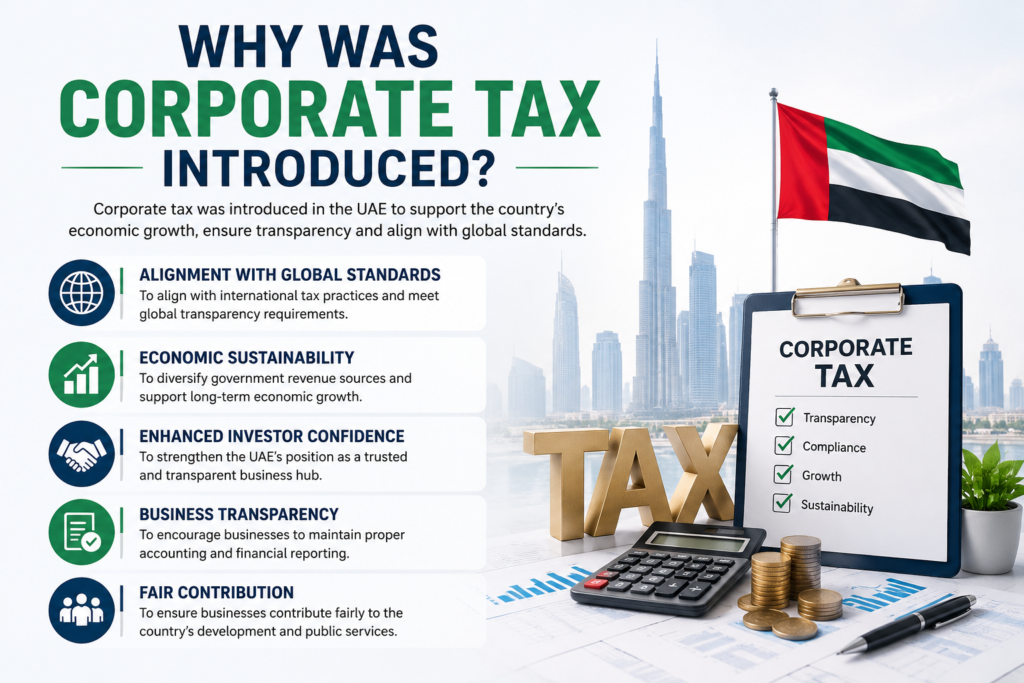
The UAE introduced corporate tax to strengthen its economic framework and align with international best practices.
Global Compliance
Countries worldwide are adopting transparent tax systems. The UAE has taken proactive steps to align with global standards.
Economic Sustainability
Corporate tax helps diversify government revenues and supports long-term economic growth.
Investor Confidence
A transparent tax environment attracts investors and improves business credibility.
Better Financial Reporting
The introduction of UAE corporate tax encourages businesses to maintain proper accounting records and financial reporting standards.
Benefits of Corporate Tax Compliance
Complying with tax regulations offers several advantages beyond legal compliance.
Improved Business Reputation
Businesses that comply with UAE corporate tax regulations build trust with customers, investors, and financial institutions.
Better Financial Management
Accurate accounting and tax reporting help business owners make informed decisions.
Reduced Risk
Compliance reduces the likelihood of penalties, fines, and regulatory issues.
Business Growth Opportunities
Companies with strong financial records often find it easier to secure investments and business partnerships.
Corporate Tax Registration Process
Businesses falling under corporate tax regulations should complete registration promptly.
Step 1: Gather Required Documents
Common requirements include:
- Trade License
- Company Registration Documents
- Emirates ID or Passport Copies
- Contact Details
- Financial Information
Step 2: Create a Tax Portal Account
Businesses must register through the relevant government tax portal.
Step 3: Submit Company Details
Provide accurate information and upload supporting documentation.
Step 4: Receive Tax Registration Number
Once approved, businesses receive their corporate tax registration number.
Step 5: Maintain Ongoing Compliance
After registration, companies must continue filing tax returns and maintaining proper records.
Importance of Proper Accounting
Successful corporate tax compliance in the UAE depends on accurate bookkeeping and accounting practices.
Businesses should maintain:
- Sales Invoices
- Purchase Records
- Expense Reports
- Payroll Records
- Bank Statements
- Financial Statements
Proper recordkeeping helps businesses calculate tax liabilities accurately and simplifies audits.
Common Corporate Tax Challenges
Many businesses face challenges when adapting to tax regulations.
Understanding Tax Rules
Corporate tax requirements can be complex for businesses unfamiliar with taxation.
Maintaining Records
Incomplete financial records may lead to compliance issues.
Meeting Deadlines
Late filings can result in penalties and additional costs.
Tax Planning
Businesses should develop effective strategies to manage tax obligations efficiently.
Best Practices for Corporate Tax Compliance
To ensure smooth compliance, businesses should:
- Keep accurate accounting records.
- Review financial statements regularly.
- Monitor tax regulation updates.
- Conduct periodic compliance reviews.
- Seek professional tax advice.
- File returns before deadlines.
Following these practices helps businesses meet UAE Corporate Tax requirements efficiently.
Future of Corporate Tax in the UAE
As the UAE economy evolves, businesses should expect ongoing developments in tax regulations and compliance procedures.
Organizations that invest in proper accounting systems and professional guidance today will be better prepared for future opportunities and regulatory changes.
Conclusion
Understanding corporate tax in the UAE is essential for businesses operating in today’s competitive environment. From registration and recordkeeping to tax filing and compliance, businesses must adopt effective financial practices to remain compliant and avoid penalties.
If your business requires expert support with Corporate Tax in the UAE, accounting, bookkeeping, tax registration, VAT services, and compliance management, Singiri & Co. is here to help.
Singiri & Co. offers professional tax and accounting solutions tailored to businesses of all sizes. Their experienced team provides reliable guidance, accurate financial reporting, and complete compliance support, helping businesses focus on growth while meeting all regulatory requirements.
Partner with Singiri & Co. today and ensure your business remains compliant, efficient, and ready for future success.
FAQS
1. What is corporate tax in the UAE?
Corporate Tax in the UAE is a tax imposed on the taxable profits of businesses operating in the UAE.
2. What is the corporate tax rate in the UAE?
Businesses pay 0% on taxable income up to AED 375,000 and 9% on taxable income above that threshold.
3. Is corporate tax registration mandatory?
Yes, eligible businesses must register and comply with corporate tax regulations.
4. Are Free Zone companies subject to corporate tax?
Some Free Zone companies may continue to benefit from tax incentives if they meet qualifying conditions.
5. What records should businesses maintain?
Businesses should maintain accounting records, invoices, payroll data, bank statements, and financial reports.
6. What happens if a business fails to comply?
Non-compliance may result in penalties, fines, and other regulatory actions.
7. Why is accounting important for corporate tax compliance?
Accurate accounting helps businesses calculate tax liabilities correctly and maintain compliance.
8. How can Singiri & Co. assist businesses?
Singiri & Co. provides corporate tax registration, filing, bookkeeping, accounting, VAT services, and compliance support.
9. How often should businesses review tax compliance?
Regular reviews throughout the year help ensure compliance and avoid issues during tax filing.