
UAE Corporate Tax Registration
The UAE is a leading global business hub, offering a strategic location, modern infrastructure, and a business-friendly environment that attracts startups, SMEs, and multinational companies
As part of its commitment to international tax standards and economic sustainability, the UAE introduced corporate tax regulations. As a result, businesses operating in the country must understand and fulfill their tax obligations. One of the most important requirements is UAE corporate tax registration.
Whether you operate a mainland company, free zone business, branch office, or foreign entity with a taxable presence in the UAE, completing UAE corporate tax registration is essential for legal compliance and smooth business operations. Failure to register on time may lead to penalties, fines, and unnecessary compliance issues.
Table of Contents
What is UAE Corporate Tax Registration?
Corporate tax registration is the process by which businesses enroll with the Federal Tax Authority (FTA) and obtain a Tax Registration Number (TRN) for tax compliance purposes.
The corporate tax system applies to taxable profits earned by businesses operating in the UAE. Companies that fall under the tax regulations are required to register within the deadlines set by the FTA.
The current corporate tax rates are:
- 0% on taxable income up to AED 375,000
- 9% on taxable income exceeding AED 375,000
Timely registration helps businesses fulfill their legal tax obligations, maintain regulatory compliance, and avoid potential penalties.
Why is corporate tax registration important?
Corporate tax registration is an essential step for businesses operating in the UAE. Beyond fulfilling a legal requirement, it helps companies maintain compliance, improve financial management, and build a strong reputation in the marketplace. Proper registration ensures that businesses can operate confidently while meeting all tax-related obligations.
Legal Compliance
Corporate tax registration ensures your business complies with UAE tax laws, reducing legal risks and demonstrating responsible business practices.
Avoid Penalties and Fines
Timely corporate tax registration helps businesses avoid fines, penalties, and compliance issues while ensuring smooth operations
Improved Business Credibility
Corporate tax compliance enhances your business reputation by demonstrating professionalism, transparency, and strong corporate governance.
Better Financial Transparency
Corporate tax registration promotes accurate accounting, organized financial records, and transparency, helping businesses make informed decisions, meet reporting requirements, and stay audit-ready
Smooth Tax Filing and Reporting
Tax Registration Number (TRN) – A TRN simplifies corporate tax filing, enables communication with tax authorities, and helps businesses meet compliance requirements on time.
Enhanced Business Growth Opportunities
Many investors, lenders, and business partners prefer to work with companies that comply with all regulatory requirements. Proper tax registration can improve access to financing, investment opportunities, and strategic partnerships, supporting long-term business growth.
Stronger Financial Management
The registration process often encourages businesses to review and improve their accounting systems, internal controls, and financial reporting practices. This can lead to better budgeting, cash flow management, and overall financial planning.
Reduced Risk of Regulatory Issues
By meeting registration and compliance requirements, businesses can reduce the likelihood of regulatory investigations, penalties, and disruptions to operations. Maintaining compliance helps create a stable foundation for sustainable growth and success.
Greater Confidence for Stakeholders
Regulatory compliance builds trust with shareholders, investors, employees, and customers by demonstrating accountability, ethical practices, and a commitment to responsible business operations
Overall, corporate tax registration plays a vital role in ensuring compliance, strengthening financial management, enhancing credibility, and supporting the long-term success of businesses operating in the UAE.
Who Must Complete UAE Corporate Tax Registration?
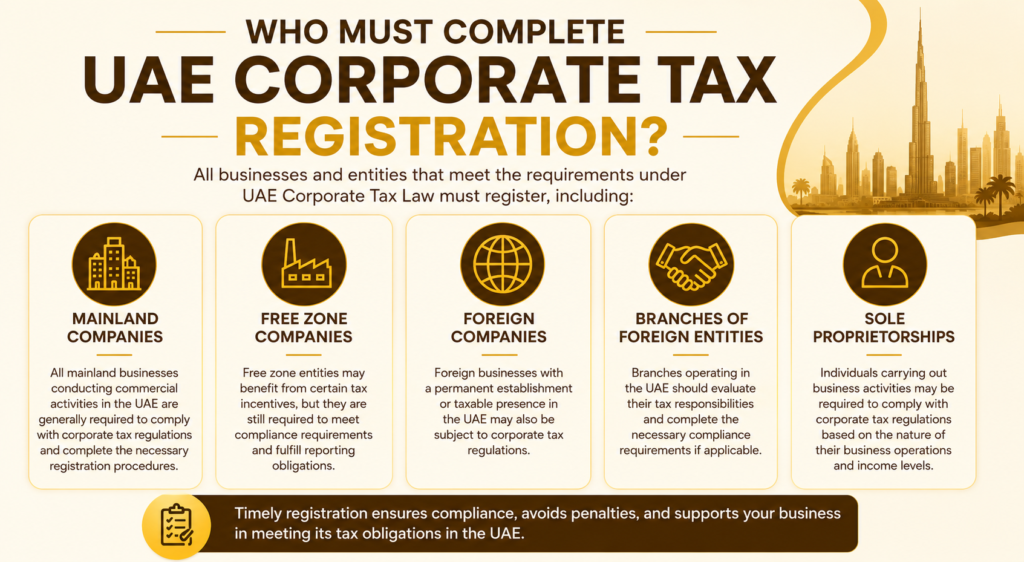
The requirement applies to various business entities operating within the UAE.
Mainland Companies—Must register for UAE Corporate Tax if conducting taxable business activities.
Free Zone Companies – Eligible for tax benefits but must meet corporate tax compliance requirements.
Foreign Companies – Subject to UAE Corporate Tax if they have a taxable presence in the UAE.
Branches of Foreign Entities—Must comply with UAE Corporate Tax regulations where applicable.
Sole Proprietorships—May need to register based on business activities and taxable income.
Documents Required
Businesses typically need the following documents:
- Trade License
- Emirates ID of owners or authorized signatories
- Passport copies
- Memorandum of Association (MOA)
- Contact details
- Business address information
- Authorization documents
- Financial information (if required)
Preparing these documents in advance helps ensure a smooth and efficient process.
Step-by-Step Process
Step 1: Create an FTA Account
Visit the Federal Tax Authority (FTA) portal and create a business account.
Step 2: Select the Relevant Service
Choose the appropriate registration option from the dashboard.
Step 3: Enter Business Information
Provide details such as:
- Company name
- License number
- Legal structure
- Business activities
- Contact information
Step 4: Upload Supporting Documents
Submit all required documents accurately.
Step 5: Review and Submit Application
Verify all information before final submission.
Step 6: Receive a Tax Registration Number (TRN)
Upon approval, the business will receive a Tax Registration Number (TRN) confirming successful registration.
Benefits
Completing the registration process offers several advantages:
- Full compliance with UAE tax regulations
- Reduced risk of penalties
- Enhanced business credibility
- Improved accounting and financial management
- Greater investor confidence
- Easier access to banking and financing services
- Streamlined tax filing and reporting
Common Challenges
Many businesses encounter challenges such as:
- Incomplete documentation
- Incorrect company information
- Limited awareness of tax regulations
- Missed deadlines
- Difficulty understanding compliance requirements
Professional consultants can help businesses avoid these issues and complete the process efficiently.
Ongoing Compliance Requirements
After registration, businesses must continue meeting their tax obligations.
Maintain Proper Accounting Records
Keep accurate bookkeeping records to support tax filings and reporting.
Prepare Financial Statements
Ensure financial statements accurately reflect business operations.
File Tax Returns
Submit returns within the prescribed deadlines.
Pay Tax Liabilities
Any applicable taxes should be paid on time to avoid penalties.
Retain Supporting Documents
Maintain records and documentation as required by UAE regulations.
Penalties for Non-Compliance
Failure to comply with tax regulations may result in:
- Administrative penalties
- Financial fines
- Increased regulatory scrutiny
- Delays in processing tax-related matters
- Legal consequences for repeated violations
Timely registration and compliance help businesses avoid these risks.
How Professional Consultants Can Help
Professional consultants assist businesses with:
- Registration support
- Compliance management
- Tax planning
- Documentation review
- Return filing
- Ongoing advisory services
Their expertise helps businesses navigate regulatory requirements efficiently and accurately.
Conclusion
UAE Corporate Tax Registration is a crucial requirement for businesses operating in the UAE. Completing registration on time helps companies comply with tax laws, avoid penalties, improve credibility, and maintain smooth business operations. Understanding the registration process and staying compliant with ongoing tax obligations is essential for long-term success.
If you need expert assistance with UAE corporate tax registration, Singiriandco g provides professional support for corporate tax registration, tax compliance, VAT services, accounting, auditing, and financial advisory solutions. Our experienced team ensures a smooth registration process, helping businesses remain compliant and focused on growth.
FAQS
1. Is UAE corporate tax registration mandatory?
Yes. Businesses falling under UAE corporate tax regulations must complete registration and obtain a Tax Registration Number (TRN).
2. What is the corporate tax rate in the UAE?
The standard rate is 0% on taxable income up to AED 375,000 and 9% on taxable income exceeding AED 375,000.
3. Do free zone companies need UAE corporate tax registration?
Yes. Free zone companies may still be required to register even if they qualify for certain tax benefits.
4. What documents are required for UAE corporate tax registration?
Trade License, Emirates ID, passport copies, MOA, business details, and authorization documents.
5. How long does UAE corporate tax registration take?
The processing time varies depending on the accuracy and completeness of the submitted information
6. Can foreign companies register for corporate tax in the UAE?
Yes. Foreign companies with a taxable presence or permanent establishment in the UAE may need to register.
7. What happens if a company fails to register?
Failure to register may result in penalties, fines, and compliance issues.
8. Can professional consultants assist with UAE corporate tax registration?
Yes. Professional tax consultants can assist with registration, compliance, documentation, and ongoing tax obligations.