

Transfer Pricing in UAE – Smart Corporate Tax Strategies
Dubai has become one of the most important global business hubs for multinational companies, startups, and investors. With the introduction of UAE Corporate Tax, businesses are now focusing more on financial compliance and international tax regulations. One of the most important topics for companies operating in the UAE today is transfer pricing in Dubai.
Transfer pricing in uae rules help ensure that transactions between related companies are conducted fairly and transparently. Businesses operating across multiple countries or within group companies must follow transfer pricing regulations to avoid penalties and maintain compliance with UAE tax laws.
In this article, we will explain what transfer pricing is, why it matters, UAE transfer pricing regulations, documentation requirements, benefits, challenges, and how businesses can stay compliant.
Table of Contents
What is Transfer Pricing?
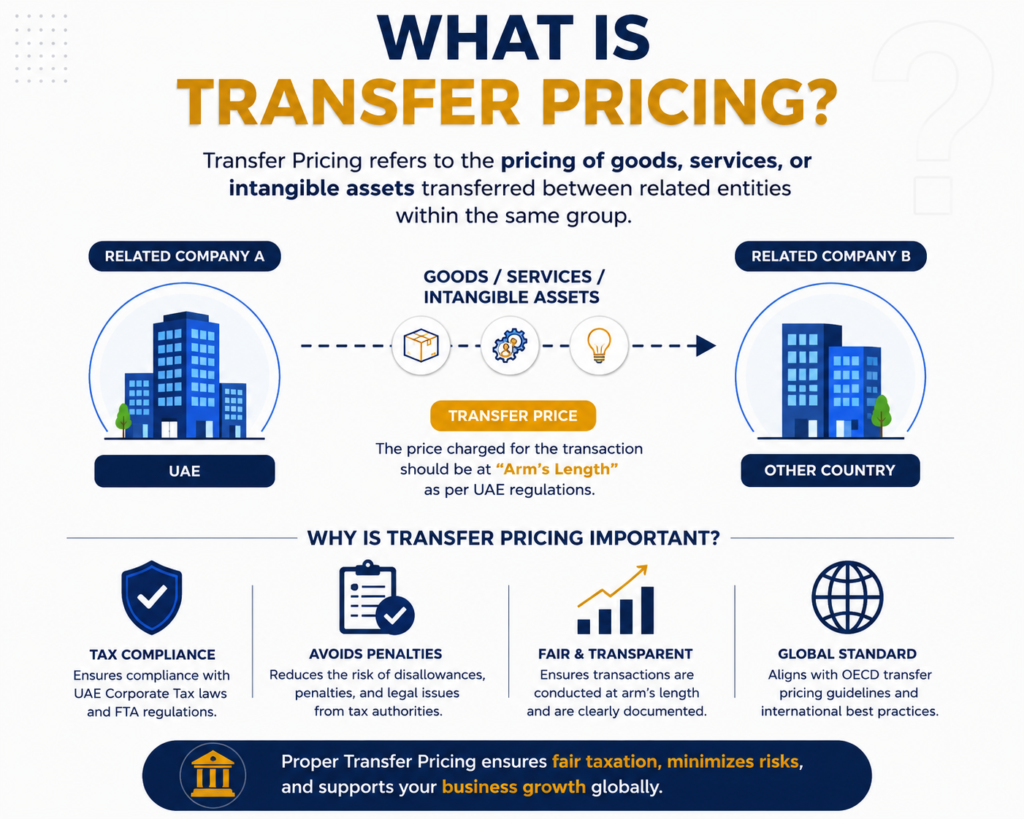
Transfer pricing refers to the pricing of goods, services, intellectual property, or financial transactions between related companies or entities within the same group.
For example, if a company in Dubai sells products to its branch company in another country, the price charged for those products is called the transfer price.
The purpose of transfer pricing in uae is to ensure that related-party transactions are conducted at fair market value, also known as the “arm’s length principle.”
Why Transfer Pricing is Important in Dubai
The UAE introduced corporate tax regulations aligned with international tax standards and OECD guidelines. As a result, transfer pricing compliance has become essential for businesses operating in Dubai.
Here are some key reasons why transfer pricing in UAE is important:
1. Corporate Tax Compliance
Businesses must ensure related-party transactions follow UAE corporate tax laws.
2. Prevent Tax Avoidance
Transfer pricing rules in the UAE help prevent companies from shifting profits unfairly between countries.
3. Financial Transparency
It improves transparency in financial reporting and related-party transactions.
4. Avoid Penalties
Proper transfer pricing documentation helps businesses avoid fines and legal issues.
5. International Standards Compliance
The UAE follows OECD transfer pricing guidelines to align with global tax practices.
UAE Transfer Pricing Rules
The UAE Corporate Tax law introduced transfer pricing requirements for businesses engaged in related-party transactions.
Companies must ensure that all related-party transactions are conducted according to the Arm’s Length Principle.
This means the pricing between related entities should be similar to prices charged between independent businesses under normal market conditions.
Professional support for transfer pricing in Dubai helps businesses understand these regulations and maintain compliance.
Who Needs Transfer Pricing Compliance?
Not every business requires detailed transfer pricing documentation. However, companies involved in related-party transactions should carefully review UAE tax requirements.
Businesses that may require transfer pricing in Dubai compliance include:
- Multinational companies
- Group companies
- Holding companies
- Free zone businesses
- UAE subsidiaries of foreign companies
- Companies involved in cross-border transactions
- Businesses sharing management or ownership
Companies exceeding specific revenue or transaction thresholds may have additional reporting obligations.
Related Parties Under UAE Tax Law
Transfer pricing in uae rules apply to transactions between related parties.
Related parties may include:
- Parent and subsidiary companies
- Companies under common ownership
- Family-owned businesses
- Directors and shareholders
- Businesses controlled by the same individuals
Understanding related-party relationships is very important for transfer pricing in Dubai compliance.
Arm’s Length Principle Explained
The arm’s-length principle is the foundation of transfer pricing regulations.
According to this principle, related companies must charge prices similar to those charged between independent businesses.
For example:
If an independent company sells a product for AED 1,000, a related company should use a similar market price unless there is a valid business reason for a difference.
This ensures fairness and prevents profit manipulation.
Transfer Pricing Documentation Requirements
Businesses may need to maintain detailed records supporting their related-party transactions.
Proper documentation for transfer pricing in Dubai may include:
Master File
Provides information about the multinational group, business activities, and global operations.
Local File
Contains detailed information about UAE-related transactions and pricing methods.
Transfer Pricing Disclosure Form
Businesses may need to disclose related-party transactions in corporate tax returns.
Maintaining accurate documentation helps businesses demonstrate compliance with UAE tax regulations.
Common Transfer Pricing Methods
The UAE follows internationally accepted transfer pricing methods.
Comparable Uncontrolled Price Method (CUP)
Compares prices charged in related-party transactions with independent market prices.
Resale Price Method
Used when products are purchased from related entities and resold to customers.
Cost Plus Method
Adds a reasonable profit margin to the cost of goods or services.
Transactional Net Margin Method (TNMM)
Analyzes net profit margins earned in related-party transactions.
Profit Split Method
Used when related entities jointly contribute to business operations.
Professional experts in transfer pricing in UAE help businesses choose the appropriate pricing method.
Benefits of Transfer Pricing Compliance
Following proper transfer pricing practices provides several business advantages.
Reduced Tax Risks
Compliance reduces the risk of penalties and tax disputes.
Better Financial Transparency
Accurate pricing improves financial reporting and business credibility.
Improved Investor Confidence
Transparent financial practices build trust among investors and stakeholders.
Regulatory Compliance
Businesses remain compliant with UAE corporate tax laws and OECD standards.
Stronger Business Reputation
Companies with proper compliance systems maintain better market credibility.
Using professional Transfer Pricing in uae services helps businesses manage these benefits effectively.
Challenges Businesses Face with Transfer Pricing
Many companies face difficulties understanding and implementing transfer pricing rules.
Complex Regulations
Transfer pricing laws can be technical and difficult to interpret.
Documentation Burden
Maintaining detailed financial records requires time and expertise.
Market Comparisons
Finding comparable market data can be challenging.
Tax Audit Risks
Improper transfer pricing may lead to tax audits and penalties.
Cross-Border Transactions
International operations often involve multiple tax jurisdictions.
Professional advisors for Transfer Pricing in uae help businesses handle these challenges smoothly.
Importance of Professional Transfer Pricing Services
Expert transfer pricing consultants help businesses comply with UAE tax laws and reduce financial risks.
Professional services may include:
- Transfer pricing analysis
- Documentation preparation
- Benchmarking studies
- Corporate Tax advisory
- Risk assessment
- Compliance reviews
- Audit support
Businesses can avoid costly errors and maintain compliance with expert guidance.
Transfer Pricing and UAE Corporate Tax
The introduction of UAE corporate tax has increased the importance of transfer pricing compliance.
Businesses must ensure that related-party transactions are properly documented and disclosed in tax filings.
Failure to comply may result in:
- Financial penalties
- Tax adjustments
- Increased audit scrutiny
- Legal complications
Proper transfer pricing support in Dubai helps businesses stay prepared for evolving tax regulations.
How Businesses Can Stay Compliant
Here are some practical tips for businesses:
Maintain Proper Documentation
Keep invoices, agreements, and transaction records updated.
Review Related-Party Transactions
Regularly evaluate pricing arrangements between group companies.
Conduct Benchmarking Studies
Compare transaction pricing with market standards.
Work with Tax Experts
Professional advisors help businesses understand UAE tax requirements.
Prepare for Audits
Maintain organized records for possible tax reviews.
Businesses using expert Transfer Pricing in uae services can reduce compliance risks significantly.
Future of Transfer Pricing in Dubai
As Dubai continues to grow as a global business center, transfer pricing regulations will become more important.
Businesses should expect:
- Increased Corporate Tax compliance requirements
- Stronger financial reporting standards
- Greater focus on transparency
- More international tax cooperation
- Advanced digital tax monitoring systems
Companies that adapt early will be better positioned for long-term success
Conclusion
Transfer pricing has become a critical part of UAE corporate tax compliance. Businesses involved in related-party transactions must ensure pricing transparency, maintain proper documentation, and follow international tax standards.
Professional transfer pricing in uae services help companies manage compliance, reduce tax risks, and improve financial transparency. As UAE tax regulations continue to evolve, businesses should take proactive steps to strengthen their compliance systems.
If you are looking for expert guidance on transfer pricing, corporate tax, VAT, and financial compliance, Singiri & Co provides trusted consultancy and professional tax advisory services across the UAE. Their experienced team helps businesses manage transfer pricing in uae requirements efficiently while supporting long-term business growth and compliance success.
FAQS
1. What is transfer pricing?
Transfer pricing refers to the pricing of transactions between related companies or group entities
2. Why is Transfer Pricing in Dubai important?
It ensures compliance with UAE Corporate Tax laws and international tax standards.
3. Who must follow transfer pricing rules in the UAE?
Businesses involved in related-party transactions may need to comply with transfer pricing regulations.
4. What is the Arm’s Length Principle?
It means related-party transactions should use pricing similar to independent market transactions.
5. What documents are required for transfer pricing compliance?
Businesses may need master files, local files, and transaction disclosures.
6. Can transfer pricing affect corporate tax filings?
Yes, transfer pricing directly impacts corporate tax reporting and compliance.
7. What happens if businesses fail to comply?
Non-compliance may result in penalties, audits, and tax adjustments.
8. How can professional consultants help?
Transfer pricing consultants help businesses prepare documentation, manage compliance, and reduce tax risks.