
Learn why auditing is important for businesses in Dubai. Ensure financial accuracy, regulatory compliance, fraud detection, and investor confidence.
Auditing plays a critical role in Dubai’s highly regulated and fast-growing business environment. It involves the independent examination of a company’s financial records to ensure accuracy, compliance, and transparency Auditing in Dubai. The UAE government mandates audits for many businesses to strengthen financial integrity, protect stakeholders, and align with international standards. Auditing affects mainland companies, free zone entities, SMEs, and large corporates across all industries.
Table of Contents
What Is Auditing in Dubai?
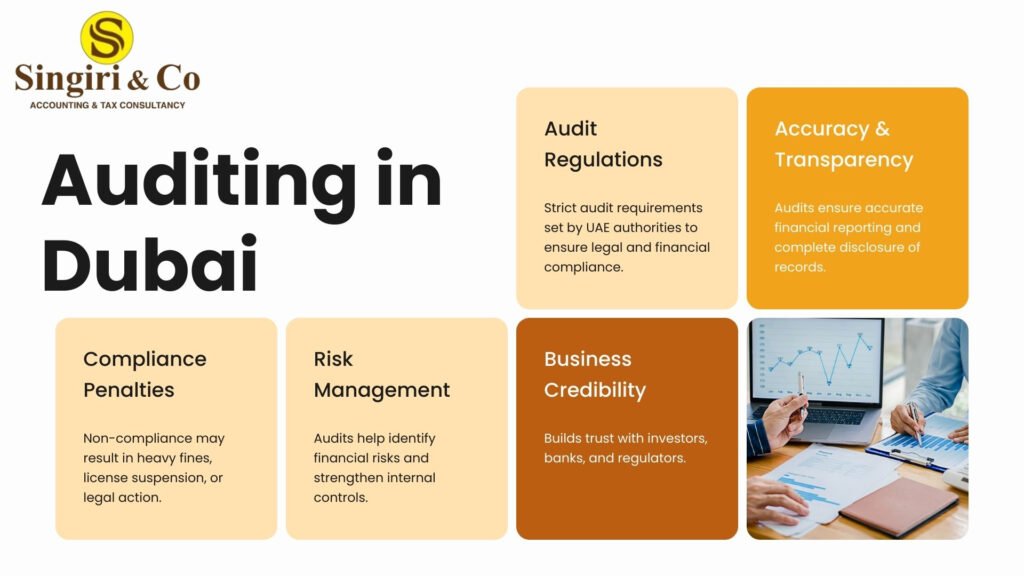
Auditing in Dubai is the systematic review of a company’s financial statements, accounting records, and internal controls by an independent, licensed auditor to ensure accuracy and compliance. The primary objective of an audit is to confirm that financial reports present a true and fair view of the company’s financial position. In the UAE, auditing plays a key role in maintaining regulatory compliance and financial transparency across businesses. Auditing in Dubai
Key points to understand:
- Conducted by an independent, licensed UAE auditor
- Verifies accuracy of financial statements and records
- Ensures compliance with UAE laws and regulations
- Enhances transparency and business credibility
- Required by regulators, banks, and investors
- Includes statutory, internal, external, and tax audits
Who Needs to Conduct Audits in Dubai?
Most businesses operating in Dubai are required to conduct audits on an annual basis to comply with local regulations and reporting standards. This includes mainland companies registered under the UAE Commercial Companies Law as well as free zone entities operating in jurisdictions such as DMCC, JAFZA, DIFC, and DAFZA. Small and medium enterprises (SMEs), large corporations, subsidiaries, and branch offices may all fall under audit requirements depending on their legal structure and licensing authority.
Who is typically required to conduct audits:
- Mainland companies registered in Dubai
- Free zone companies such as DMCC, JAFZA, DIFC, and DAFZA
- Small and medium enterprises (SMEs)
- Large corporations and group entities
- Subsidiaries and branch offices
- Businesses seeking bank loans or investor funding
Audit Requirements & Regulations in Dubai
Dubai’s audit framework is governed by multiple laws and regulatory bodies to ensure financial accountability, transparency, and compliance with international best practices. These regulations apply to both mainland and free zone companies and are designed to maintain accurate financial reporting across all sectors. Businesses must prepare audited financial statements in line with approved accounting standards and submit them to relevant authorities when required.Auditing in Dubai
UAE Commercial Companies Law
The UAE Commercial Companies Law requires most mainland companies to conduct annual audits to ensure financial transparency and legal compliance. Audited financial statements must be prepared in accordance with International Financial Reporting Standards (IFRS) and made available to regulatory authorities when requested. These audits help authorities assess a company’s financial health and adherence to statutory obligations.
Free Zone Authority Requirements
Free zone companies must follow audit regulations set by their respective authorities. Many free zones require audited financial statements to be submitted every year as part of license renewal, ongoing compliance, and regulatory reporting obligations. Audit submissions also help free zone authorities monitor business activity and financial stability. Non-submission can delay renewals or impact business operations.Auditing in Dubai
Bank & Investor Audit Requirements
Banks, investors, and financial institutions often request audited financial statements before approving loans, opening or maintaining bank accounts, or finalizing investments. Audits help demonstrate financial stability, reduce risk, and improve access to funding opportunities. They also increase confidence among stakeholders when evaluating long-term partnerships or investments.Auditing in Dubai
Key Reasons Why Auditing Is Important for Businesses in Dubai
Auditing is more than a legal formality—it is a strategic business tool that helps companies maintain compliance, transparency, and financial discipline. In Dubai’s highly regulated business environment, audits play a vital role in meeting statutory requirements and aligning with international accounting standards. They provide reliable financial insights that support informed decision-making and long-term planning. Auditing also strengthens internal controls,
Ensures Legal & Regulatory Compliance
Audits help businesses comply with UAE laws, free zone regulations, and statutory requirements by ensuring financial records are accurate and up to date. Regular audits reduce the risk of regulatory penalties, fines, or license suspension. They ensure timely submission of required financial reports to authorities. Audits also demonstrate a company’s commitment to lawful and ethical business practices.
Enhances Financial Transparency
Audited financial statements provide a clear and reliable view of a company’s financial position and performance. This transparency supports better internal management and informed decision-making. It helps identify inconsistencies or errors in financial reporting. Transparent records also improve accountability across departments.Auditing in Dubai
Builds Investor & Stakeholder Confidence
Investors, business partners, and banks rely on audited reports to evaluate financial stability and risk. Audits improve business credibility and professionalism in the market. They reassure stakeholders about financial accuracy and governance. This confidence supports long-term relationships and growth opportunities.Auditing in Dubai
Supports Corporate Tax & VAT Compliance
With the introduction of UAE Corporate Tax and ongoing VAT regulations, audits play a key role in accurate tax reporting. Audited accounts help ensure correct tax calculations and timely filings. They reduce the risk of tax penalties and disputes. Audits also ensure readiness for Federal Tax Authority (FTA) inspections.Auditing in Dubai
Types of Audits Required in Dubai
Different businesses may require different types of audits depending on regulatory and operational needs.Statutory audits are mandatory for most companies and focus on financial statement accuracy. Internal audits assess internal controls and risk management. Tax audits review VAT and Corporate Tax compliance, while special purpose audits are conducted for mergers, acquisitions, or regulatory investigations.
Common audit types:
- Statutory Audit – Annual UAE law compliance
- Internal Audit – Checks internal controls
- Tax Audit – Reviews VAT & Corporate Tax
- External Audit – Independent verification
- Special Purpose Audit – Mergers, acquisitions, or regulatory needs
Audit Compliance Checklist for Businesses
- Maintain accurate and up-to-date books of accounts.
- Follow IFRS (International Financial Reporting Standards) accounting standards.
- Appoint an approved and licensed auditor.
- Prepare and organize supporting financial documents.
- Submit audit reports within regulatory deadlines.
- Retain financial records as per UAE regulations.
- Conduct periodic internal audits for early issue detection.
- Ensure proper reconciliation of bank statements and ledgers.
- Review compliance with VAT and other tax obligations.
- Train staff on record-keeping and financial compliance procedures.
Penalties for Non-Compliance With Audit Requirements
Failure to comply with audit requirements in Dubai can lead to significant consequences for businesses. Companies may face regulatory fines, delays or rejection of license renewals, and restrictions on bank accounts. Non-compliance also increases scrutiny from authorities and may trigger legal action. Additionally, it can damage investor and stakeholder trust, affect business reputation, and create complications during tax audits or financial investigations.
key penalties for non-compliance:
- Regulatory fines and financial penalties
- Delays or rejection of license renewals
- Restrictions or freezing of bank accounts
- Increased audits and government scrutiny
- Legal actions or disputes during tax inspections
- Loss of investor and stakeholder confidence
Benefits of Auditing for UAE Businesses
Auditing provides businesses in Dubai with advantages that go beyond mere regulatory compliance. It improves financial accuracy, strengthens internal controls, and helps detect errors or fraud at an early stage. Audited financial data supports informed decision-making, enhances operational efficiency, and ensures reliable reporting to stakeholders. Companies with robust audit practices gain credibility, attract investors, and are better positioned for business growth, expansion, and long-term sustainability.
Key benefits:
- Ensures accurate and reliable financial reporting
- Strengthens internal controls and risk management
- Early detection of errors or fraud
- Supports informed strategic decisions
- Enhances investor and stakeholder confidence
- Facilitates business growth and scalability
How to Prepare Your Business for Audit in Dubai
Preparation is essential for a smooth and successful audit process. Businesses should upgrade their accounting systems, maintain proper financial documentation, and conduct internal reviews before the audit begins. Ensuring that records are accurate and complete helps auditors verify financial statements efficiently. Training staff on compliance requirements, maintaining organized and accessible records, and proactively addressing potential issues can significantly reduce audit risks and prevent delays. Early preparation also strengthens internal controls, improves operational efficiency, and ensures full regulatory compliance.
Tips to prepare for an audit:
- Upgrade accounting and ERP systems
- Maintain complete and accurate financial records
- Conduct internal pre-audit reviews
- Train staff on compliance and reporting standards
- Address discrepancies or errors proactively
- Organize supporting documents for easy access
Conclusion
Auditing is a fundamental requirement for businesses operating in Dubai. It ensures compliance with UAE laws and free zone regulations, strengthens financial transparency, and builds trust among investors, partners, and stakeholders. Audits also help identify risks, prevent fraud, and support informed business decisions that drive growth. By staying audit-ready and compliant, companies can avoid penalties, maintain their licenses, and position themselves for sustainable success in Dubai’s competitive business environment.