
Starting a new business in Dubai offers exciting opportunities for entrepreneurs, startups, freelancers, and small enterprises. However, understanding UAE corporate tax regulations is essential for maintaining compliance and managing business expenses. One of the most important tax benefits available to eligible businesses is Small Business Relief (SBR), which can significantly reduce their corporate tax burden.
Understanding the UAE Small Business Relief Rules Explained in 2026 is particularly important for companies with annual revenue of AED 3 million or less. This relief allows eligible resident businesses to be treated as having no taxable income for a qualifying tax period, subject to the applicable conditions and election requirements.
In August 2026, the UAE Ministry of Finance announced an extension of Small Business Relief to tax periods ending on or before 31 December 2029. This extension provides additional support for qualifying small businesses and startups. However, businesses must understand the eligibility requirements, exclusions, documentation responsibilities, and filing procedures before claiming this benefit.
Table of Contents
What Is Small Business Relief Under UAE Corporate Tax?
Small Business Relief under the UAE Corporate Tax framework helps eligible small businesses reduce their tax burden and simplify compliance.
Under Article 21 of Federal Decree-Law No. 47 of 2022, eligible businesses can elect to be treated as having no taxable income for a qualifying tax period.
The UAE Small Business Relief Rules Explained in 2026 are particularly beneficial for startups and small enterprises.
However, relief is not automatic. Businesses must elect it in their corporate tax return and continue meeting the eligibility requirements. Registration, filing, and record-keeping obligations may still apply.
Who Can Claim Small Business Relief in 2026?
To qualify for small business relief in 2026, a business must satisfy the relevant conditions under UAE corporate tax legislation.
1. UAE Resident Taxable Persons
Small Business Relief is available to eligible UAE resident taxable persons, including qualifying companies and natural persons carrying on a business who fall within the Corporate Tax framework.
Examples may include:
- Small limited liability companies (LLCs).
- Eligible consultancy and professional service businesses.
- Small trading and commercial enterprises.
- Qualifying freelance businesses.
- Startups and newly established businesses.
The business must be a resident taxable person for corporate tax purposes and meet the applicable revenue requirements.
2. Annual Revenue Must Not Exceed AED 3 Million
The principal eligibility requirement is the revenue threshold.
A business must have revenue of AED 3 million or less in the relevant tax period and in every previous tax period, as applicable under the rules.
Revenue is different from profit. Eligibility is determined using revenue calculated in accordance with the applicable accounting standards accepted in the UAE, rather than simply the amount of profit remaining after expenses.
For example, a business generating AED 2.5 million in annual revenue may qualify if it meets the other conditions. A business generating AED 3.2 million cannot qualify for that period, even if its net profit is comparatively low.
The UAE Small Business Relief Rules, therefore, require careful revenue monitoring and accurate financial records.
3. Newly Established Businesses
New businesses may qualify for Small Business Relief if they meet the applicable conditions. Recently established companies should review their revenue for the current and previous tax periods.
For example, a newly established consultancy earning AED 800,000 during its first tax period may qualify if it meets all other eligibility requirements.
However, incorporation alone does not guarantee eligibility. Businesses must consider their tax status, revenue history, exclusions, and required election under the UAE Small Business Relief Rules Explained in 2026.
4. The Business Must Not Fall Under an Excluded Category
Certain businesses cannot claim Small Business Relief, even if their revenue is below AED 3 million.
These exclusions include:
- Qualifying Free Zone Persons.
- Members of multinational enterprise groups subject to country-by-country reporting requirements due to consolidated revenue exceeding AED 3.15 billion.
Free Zone businesses should carefully review their tax classification before claiming relief. A Free Zone company does not automatically qualify simply because its revenue is below AED 3 million.
Understanding the UAE Small Business Relief Rules Explained in 2026 helps businesses identify eligibility conditions and avoid incorrect tax relief claims. The Federal Tax Authority provides official guidance on these requirements and exclusions. visions.
What Changed for Small Business Relief in 2026?
One of the most important developments in 2026 was the extension of Small Business Relief.
The Ministry of Finance announced on 7 August 2026 that Ministerial Decision No. 131 of 2026 extends the relief to tax periods ending on or before 31 December 2029. Previously, the relief was scheduled to apply only to qualifying tax periods ending on or before 31 December 2026.
The AED 3 million revenue threshold and the principal eligibility conditions remain in place.
This extension gives eligible businesses additional time to benefit from the scheme and plan their tax compliance activities.
The UAE Small Business Relief Rules Explained in 2026 should therefore be reviewed against the latest legislation rather than older articles or guidance that still refer exclusively to the original 2026 deadline.
Businesses should verify the applicable rules for their specific accounting period before submitting a return.
How Does Small Business Relief Work?
A Dubai-based consulting company earns AED 2.4 million in revenue during its 2026 tax period. Its previous tax periods also remain within the AED 3 million revenue threshold. The company is a UAE resident taxable person and does not fall under any excluded category.
If the company meets all applicable conditions and elects Small Business Relief in its corporate tax return, it can be treated as having no taxable income for that tax period.
However, another company earns AED 2.8 million in 2026 but generated AED 3.4 million in an earlier tax period. It would not qualify for relief because its previous revenue exceeded the threshold.
These examples highlight the importance of understanding the UAE Small Business Relief Rules Explained in 2026 and reviewing both current and historical revenue before claiming tax relief.
How Can Businesses Apply for Small Business Relief?
Businesses should follow a structured process to assess eligibility and complete their corporate tax compliance obligations.
- Step 1: Review Revenue and Financial Records: Prepare accurate financial statements and review revenue for the current and previous tax periods. Ensure that revenue is calculated using the applicable accounting standards.
- Step 2: Confirm Corporate Tax Eligibility: Check whether the business qualifies as a UAE resident taxable person and whether any exclusion applies, particularly if the business operates in a free zone or belongs to a multinational group.
- Step 3: Review Corporate Tax Registration: Confirm that the business has completed the applicable corporate tax registration requirements with the Federal Tax Authority. Small Business Relief should not be treated as an automatic exemption from registration obligations.
- Step 4: Elect Relief in the Corporate Tax Return: Eligible businesses must make the Small Business Relief election in their corporate tax return for the relevant period. The election should be made correctly and supported by appropriate records.
- Step 5: Maintain Supporting Documentation: Keep accounting records, invoices, financial statements, revenue calculations, and other relevant documentation. These records help demonstrate eligibility and support the business during a tax review.Professional corporate tax services can help business owners assess their eligibility and reduce the risk of errors in their tax returns.
Important Limitations Businesses Should Understand
Although Small Business Relief offers tax benefits, businesses must understand its limitations.
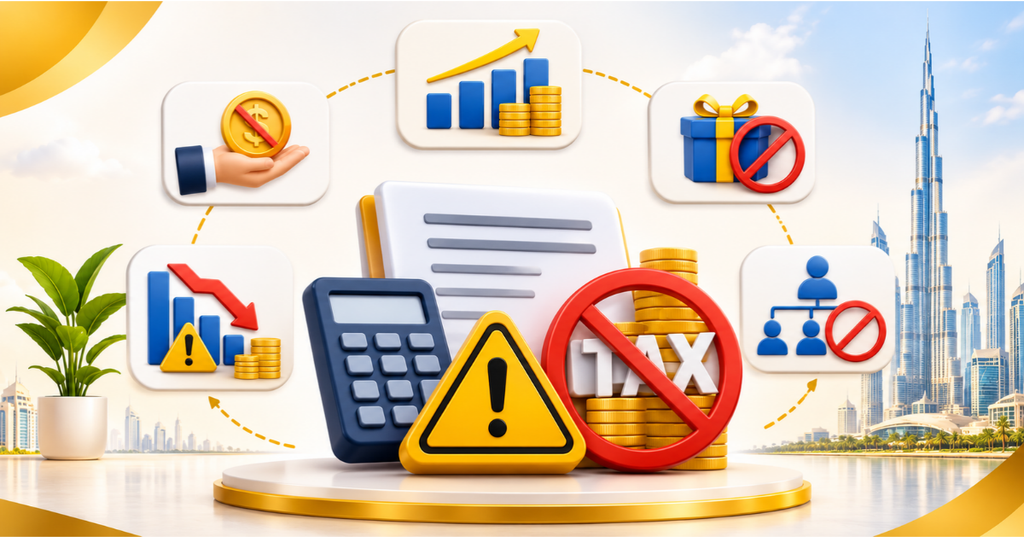
Revenue must not exceed AED 3 million in the relevant and previous tax periods. Businesses exceeding this threshold cannot claim relief for that period or subsequent periods.
Businesses claiming relief cannot use other tax reliefs and deductions available under the Corporate Tax framework for the same period.
Tax losses and disallowed net interest expenditure incurred during a relief period generally cannot be carried forward.
Businesses must also avoid artificially splitting operations to remain below the revenue threshold, as this may trigger UAE Corporate Tax anti-abuse rules.
Understanding these restrictions is essential under the UAE Small Business Relief Rules Explained in 2026, especially for growing businesses.
Why Accounting and Audit Support Matters
Proper financial management helps businesses claiming Small Business Relief maintain accurate records and meet tax requirements.
Professional accounting services support bookkeeping, financial statement preparation, account reconciliation, and revenue monitoring. Corporate tax services assist with eligibility checks, tax returns, relief elections, and compliance reviews.
Audit services provide additional assurance where required. Businesses should also seek professional advice before making structural changes that may affect their tax position.
Understanding the UAE Small Business Relief Rules Explained in 2026 helps businesses manage financial reporting and tax compliance effectively.
Common Mistakes to Avoid
Small businesses should avoid several common mistakes when claiming relief under the UAE Small Business Relief Rules Explained in 2026:
- Assuming that every company with revenue below AED 3 million automatically qualifies.
- Calculating eligibility using net profit instead of revenue.
- Ignoring revenue from previous tax periods.
- Forgetting to make the required election in the Corporate Tax return.
- Assuming that relief removes all registration, filing, and record-keeping obligations.
- Overlooking exclusions applicable to qualifying free zone persons and certain multinational groups.
- Relying on outdated guidance about the relief’s expiry date.
By addressing these issues early, business owners can make informed decisions, maintain accurate financial records, and manage their tax obligations effectively with professional Accounting Services and Corporate Tax Services.
Conclusion: Get Expert Corporate Tax Support from Singiri & Co.
Small Business Relief can be a valuable opportunity for eligible startups, consultants, service providers, and small enterprises operating in the UAE. However, businesses must satisfy the revenue threshold, confirm their eligibility, understand the applicable exclusions, and make the required election correctly.
Understanding the UAE Small Business Relief Rules Explained in 2026 helps entrepreneurs make informed financial decisions, avoid common compliance mistakes, and prepare for sustainable business growth.
Singiri & Co. supports businesses with professional accounting services, corporate tax services, bookkeeping, tax compliance assistance, and financial advisory support. Whether you are launching a startup, managing an established small business, or reviewing your eligibility for Small Business Relief, our team can help you understand your obligations and organise your financial records.
FAQS
1. What is Small Business Relief in the UAE?
Small Business Relief allows eligible UAE resident businesses to be treated as having no taxable income for a qualifying tax period.
2. What is the revenue limit for Small Business Relief in 2026?
Businesses must have annual revenue of AED 3 million or less in the relevant and previous tax periods, subject to applicable conditions.
3. Can newly established startups claim Small Business Relief in Dubai?
Yes. Eligible startups can claim relief if they meet the residency, revenue, and other applicable requirements.
4. Is Small Business Relief automatically applied to eligible companies?
No. Businesses must elect Small Business Relief in their Corporate Tax return for each qualifying tax period.
5. How long is UAE Small Business Relief available?
Under Ministerial Decision No. 131 of 2026, the relief is extended to tax periods ending on or before 31 December 2029.
6. Do businesses need Corporate Tax registration to claim Small Business Relief?
Yes. Eligible businesses must comply with applicable Corporate Tax registration and return filing requirements.
7. Can Free Zone companies claim Small Business Relief in the UAE?
Qualifying Free Zone Persons are excluded from Small Business Relief, even if their revenue is below AED 3 million.