
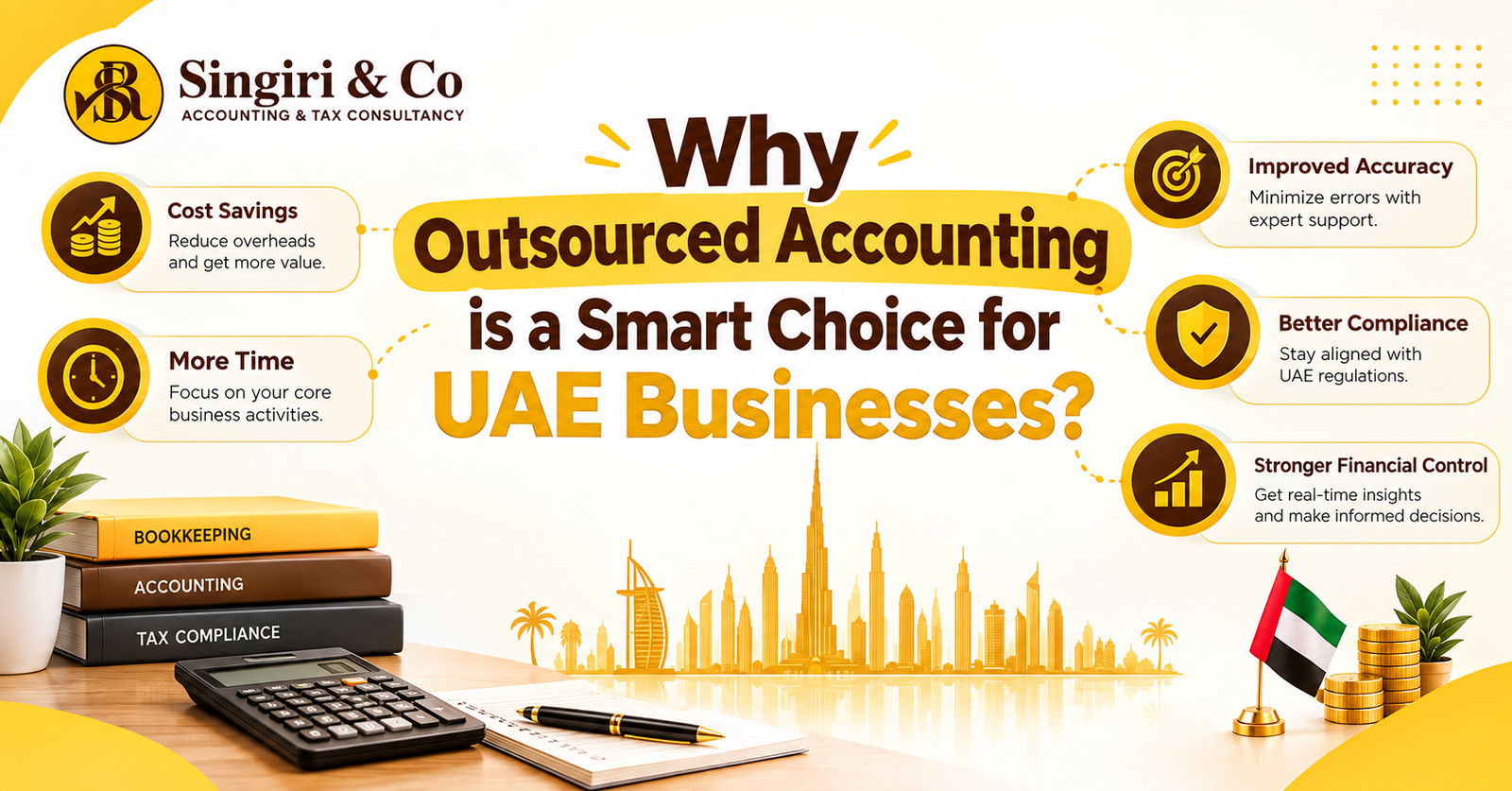
A Guide to Monthly Accounting Reports for Small Businesses in the UAE
Running a small business in the UAE requires more than generating sales and paying expenses. Business owners need to know whether the company is profitable, whether enough cash is available, which customers owe money, and whether financial records are properly maintained for tax and compliance purposes.
This is why monthly accounting reports for businesses in UAE should be reviewed regularly. Monthly accounting reports for small businesses in UAE identify financial problems early, control expenses, manage cash flow, and make informed decisions instead of waiting until the end of the financial year.
Table of Contents
Why Monthly Accounting Reports Matter for Small Businesses
Small businesses often operate with limited cash reserves. A delayed customer payment, unexpected expense, or incorrect transaction can quickly affect the company’s financial position.
Regular monthly accounting reports in UAE help owners:
- Monitor revenue and expenses
- Track profitability
- Manage cash flow
- Identify unpaid customer invoices
- Monitor supplier payments
- Control unnecessary expenses
- Review VAT records where applicable
- Maintain corporate tax records
- Detect accounting errors
- Improve budgeting and financial planning
Instead of relying only on the bank balance, business owners can use accounting reports to understand the complete financial position of their company. Professional accounting services for monthly accounting reports for businesses in UAE can also help businesses prepare and review these reports consistently.
1. Profit and Loss Statement
The profit and loss statement, also called the income statement, is one of the most important reports to review every month.
It generally shows:
- Total sales or revenue
- Cost of goods sold
- Gross profit
- Operating expenses
- Other income or expenses
- Net profit or loss
A business may generate AED 100,000 in monthly sales but still have low profits because rent, salaries, marketing, software, transportation, and other expenses are high.
Owners can compare current performance with past months and spot anomalous changes by reviewing the P&L each month. It is a core part of small business monthly accounting reports for small businesses in UAE because it shows whether the business is actually making money.
2. Balance Sheet
The balance sheet provides an overview of the company’s financial position at a specific date. In general, it consists of equity, liabilities, and assets
Assets may include cash, bank balances, receivables, inventory, equipment, and other business assets.
Liabilities may include loans, supplier balances, accumulated costs, and other obligations.
Equity includes the owner’s capital, retained earnings, and other equity balances.
A company can be profitable but still experience financial pressure if it has high liabilities or insufficient liquid assets. Reviewing the balance sheet Monthly Accounting Reports for businesses in UAE owns and owing.
3. Cash Flow Report
Profit does not always equate to financial resources. A company may record a sale today but receive payment several weeks later, while salaries, rent, and supplier payments may need to be paid immediately.
A monthly cash flow report helps track:
- Cash received
- Cash paid
- Operating cash flow
- Investing activities
- Financing activities
- Closing cash balance
This report can identify potential cash shortages before they become serious. Effective cash flow management for small businesses also supports better decisions about hiring, purchasing inventory, marketing, and expansion.
4. Accounts Receivable Aging Report
An accounts receivable aging report shows how much money customers owe and how long invoices have remained unpaid.
Invoices are commonly classified as current, 1–30 days overdue, 31–60 days overdue, 61–90 days overdue, or more than 90 days overdue.
This report helps owners identify slow-paying customers and follow up on outstanding invoices. If receivables continue increasing while cash remains tight, the business may need to improve its collection process.
Regular monthly accounting reports for small businesses in uae can help businesses keep receivable records updated and support timely payment follow-ups.
5. Accounts Payable Aging Report
While receivables show money owed to the business, accounts payable show money the business owes to suppliers and other parties
A monthly report can show:
- Outstanding supplier invoices
- Overdue payments
- Upcoming payment obligations
- Supplier balances
- Potential late-payment issues
Reviewing accounts payable helps businesses avoid missed payments, maintain supplier relationships, and plan cash requirements. Accurate payables tracking is an important part of bookkeeping services for small businesses
6. Bank Reconciliation Report
Bank reconciliation compares actual bank statements with the company’s accounting records. It is a simple but important monthly process.
It can identify:
- Missing transactions
- Duplicate entries
- Incorrect amounts
- Unrecorded bank charges
- Unpresented payments
- Unidentified deposits
Businesses should not assume that their accounting software balance is automatically correct. Monthly accounting reports for businesses in UAE helps ensure that financial reports are based on accurate information and is a standard part of professional accounting services in Dubai
7. Expense Report
A Monthly Accounting Reports for Businesses in UAE shows where the company’s money is being spent. Common expenses include salaries, rent, utilities, marketing, transportation, professional fees, software, travel, insurance, and office supplies.
Management should compare current expenses with previous months and budgets. A sudden increase in an expense category should be investigated rather than ignored.
Regular expense monitoring supports better budgeting, cost control, and profitability management. Outsourced accounting services in Dubai can also provide expense analysis and management reporting.
8. VAT Report
VAT-registered businesses should regularly review their VAT-related accounting records
The review may include:
- Output VAT
- Input VAT
- Tax invoices
- Credit notes
- Taxable sales
- Taxable purchases
- VAT payable or recoverable
The FTA requires UAE VAT-regulated businesses to maintain relevant VAT documentation and supporting records. Regular VAT reviews can help businesses identify errors and organize documents before filing
Professional VAT accounting services in Dubai can support VAT transaction reviews, reconciliations, documentation, and reporting
9. Inventory Report
For businesses selling physical products, inventory is an important financial area
A monthly inventory report may include:
- Opening stock
- Purchases
- Sales
- Closing stock
- Fast-moving products
- Slow-moving products
- Damaged or obsolete stock
Poor inventory management can tie up working capital. Monthly accounting reports for businesses in UAE reviews help businesses identify products that sell quickly and products that may require better purchasing or promotional strategies
10. Budget vs Actual Report
A budget vs. actual report contrasts actual outcomes with projected financial performance
For example:
| Category | Budget | Actual | Difference |
| Revenue | AED 100,000 | AED 92,000 | -AED 8,000 |
| Rent | AED 15,000 | AED 15,000 | — |
| Marketing | AED 8,000 | AED 11,000 | +AED 3,000 |
| Payroll | AED 25,000 | AED 26,000 | +AED 1,000 |
This report helps owners understand where performance differs from expectations.
If revenue is consistently below budget, management can investigate sales performance. If expenses are consistently above budget, cost controls may be necessary.
Budget monitoring is also an important part of financial reporting services in the UAE because it helps businesses connect accounting data with future planning.
11. Accounting and Tax Compliance Review
Monthly accounting reports in UAE accounting should not focus only on profitability. Businesses should also check whether their financial records are complete and supported by appropriate documents.
The review may include:
- Sales invoices
- Purchase invoices
- Bank statements
- Expense receipts
- Payroll records
- Fixed asset records
- Loan documents
- VAT records where applicable
- Corporate tax-related accounting information
Maintaining organized records throughout the year makes financial reporting and tax-related processes easier
How Often Should Small Businesses Review These Reports?
Accounting records should ideally be updated throughout the month rather than waiting until year-end
A practical monthly process can be:
Week 1: Record and verify transactions
Week 2: Complete bank reconciliation and review receivables and payables.
Week 3: Prepare the Profit and Loss Statement, Balance Sheet, and Cash Flow Report
Week 4: Review VAT records, expenses, inventory, budgets, and key financial indicators
This approach makes monthly accounting reports for Businesses in UAE more useful because the information is timely and easier to act on
Common Mistakes Small Businesses Should Avoid

Businesses may prepare accounting reports but fail to review them properly. Common mistakes include:
- Looking only at the bank balance
- Ignoring unpaid invoices
- Delaying bank reconciliation
- Mixing personal and business expenses
- Failing to maintain supporting documents
- Not comparing monthly performance
- Ignoring unusual expense increases
- Waiting until tax deadlines to organize records
- Using incomplete or inaccurate accounting data
The purpose of monthly accounting reports for businesses in UAE is not simply to create spreadsheets. It is to turn financial information into useful business decisions.
Benefits of Professional Accounting Services
As transaction volumes increase, maintaining accurate books can become time-consuming. Professional accounting support can help with bookkeeping, financial reporting, bank reconciliation, receivables, payables, VAT accounting, corporate tax accounting support, payroll, cash-flow forecasting, budget monitoring, and financial statement preparation.
Monthly accounting reports for businesses in UAE are especially useful for companies that need reliable financial information but do not yet require a full-time internal accounting department
With outsourced accounting support, businesses can access professional bookkeeping and reporting while reducing the administrative burden on internal teams.
Conclusion
Regular financial reporting gives UAE small businesses greater visibility into revenue, expenses, profitability, cash flow, receivables, payables, inventory, and tax-related records.
Reviewing monthly accounting reports for businesses in UAE helps business owners identify financial problems early, improve cash management, control expenses, and make better business decisions.
Singiri & Co. may provide firms with expert accounting, bookkeeping, tax, cash-flow management, and financial reporting solutions if internal account administration is becoming time-consuming. Their services can help monthly accounting reports for small businesses in the UAE maintain organized financial records and gain clearer insight into business performance
For businesses looking for reliable accounting services in Dubai, professional support can make monthly financial management more accurate, organized, and efficient.
FAQS
1. What are the most important monthly accounting reports?
Key reports include the Profit and Loss Statement, Balance Sheet, Cash Flow Report, Accounts Receivable Aging, Accounts Payable Aging, Bank Reconciliation, Expense Report, VAT Report (where applicable), and Inventory Report
2. Why should small businesses review accounting reports every month?
monthly accounting reports for small businesses in UAE can help identify cash-flow problems, unpaid invoices, increasing expenses, accounting errors, and profitability issues before they become larger problems
3. Is a profit and loss statement enough?
No. Businesses should also review cash flow, assets, liabilities, receivables, payables, expenses, and other relevant financial information
4. Do UAE businesses need to maintain accounting records?
Businesses subject to UAE Corporate Tax are expected to maintain financial statements and supporting records that support taxable income and tax-return information
5. Can small businesses outsource monthly accounting?
Yes. Outsourced accounting services can provide bookkeeping, reconciliations, financial reporting, VAT accounting support, and other accounting functions without requiring a full-time internal accountant
6. Should VAT records be reviewed every month?
VAT-registered businesses should regularly review VAT-related transactions and supporting documents to help maintain accurate records and prepare for VAT compliance
7. Can a small business outsource monthly accounting?
Yes. Outsourced accounting services can provide bookkeeping, reconciliations, financial reporting, VAT accounting support, and other accounting functions without requiring a full-time internal accountant